
Root Canal Treatment: What to Expect
Root canal treatment is a commonly performed dental procedure used to manage infection or damage within a tooth. It focuses on treating the inner part of the tooth, known as the pulp, while aiming to preserve the natural tooth structure.
At The Smile Place Mt Eliza, we provide guidance to help patients understand what root canal treatment involves and what to expect.
What Is a Root Canal Treatment?
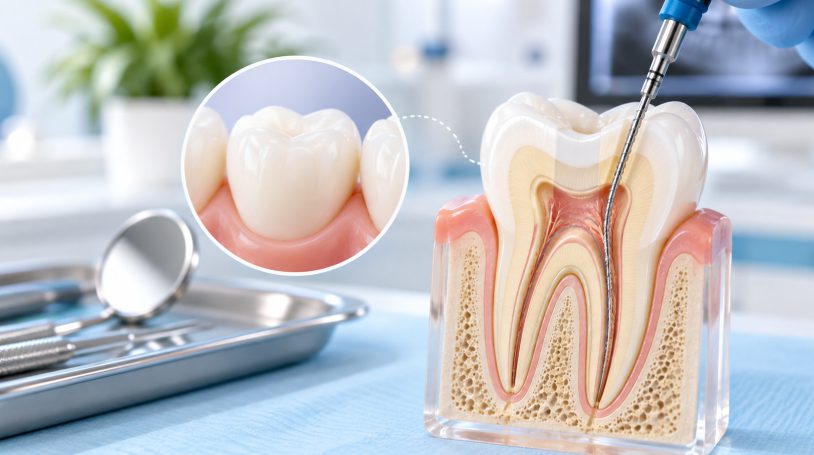
Inside each tooth is chamber – the root canal, filled with soft tissue called the pulp, which contains nerves and blood vessels. When this tissue becomes inflamed or infected—often due to deep decay, cracks, or trauma—treatment may be required.
Root canal treatment involves removing the affected pulp, cleaning the internal root canal space, and sealing the tooth to help prevent further infection.
Signs You May Need a Root Canal
Symptoms can vary, but may include:
- Ongoing tooth pain
- Sensitivity to hot or cold
- Pain when biting or chewing
- Swelling or tenderness in the gums
- Tooth discolouration
A dental examination is required to determine the cause of symptoms and appropriate treatment.
Step-by-Step: What Happens During a Root Canal
1. Assessment and Imaging
An X-ray or 3D Ct scan may be taken to assess the shape of the root canals and identify any infection.
2. Numbing the Area
Local anaesthetic is used to help ensure the procedure is as comfortable as possible.
3. Isolating the Tooth
A rubber dam (a protective sheet) is placed around the tooth to keep it clean and dry during treatment.
4. Accessing the Pulp
A small opening is made in the tooth to access the pulp chamber.
5. Cleaning the Root Canals
Special instruments are used to remove the infected pulp and clean the inside of the root canals.
The canals are also flushed with cleaning solutions to help remove debris and bacteria.
6. Filling the Canals
Once cleaned and dried, the canals are filled with a biocompatible material to seal the space.
7. Restoring the Tooth
After the root canal, the tooth is restored with a filling or crown to help protect it and restore function.
After the Procedure
Following treatment, some temporary discomfort may occur. General care may include:
- Avoiding chewing on the treated tooth until advised
- Maintaining regular brushing and cleaning between teeth
- Attending follow-up appointments if recommended
With appropriate care, a treated tooth may continue to function for many years.
When to Seek Advice
You should contact your dental practitioner if you experience:
- Persistent or worsening pain
- Swelling that does not improve
- Difficulty biting or chewing
The team at The Smile Place Mt Eliza can assess your situation and provide appropriate guidance.
Final Thoughts
Root canal treatment focuses on addressing infection within the tooth while maintaining its structure. Understanding the steps involved can help you feel more informed about the procedure.
Disclaimer:
This information is general in nature and does not replace professional dental advice. Please consult your dental practitioner for recommendations tailored to your individual circumstances.